You loved Elden Ring. Now read The Name of the Wind.
 Game
Game
 Book
Book
Films, shows, games, books and music in one library, each with its own screen and its own units. Consu recommends across all five.
No account needed · Free · No ads · Pro is €5.99, once
It starts as a library.
Everything goes into one list, each with a status and a rating out of ten. That list is the only thing Consu reads. No model, nothing trained, nothing guessed.
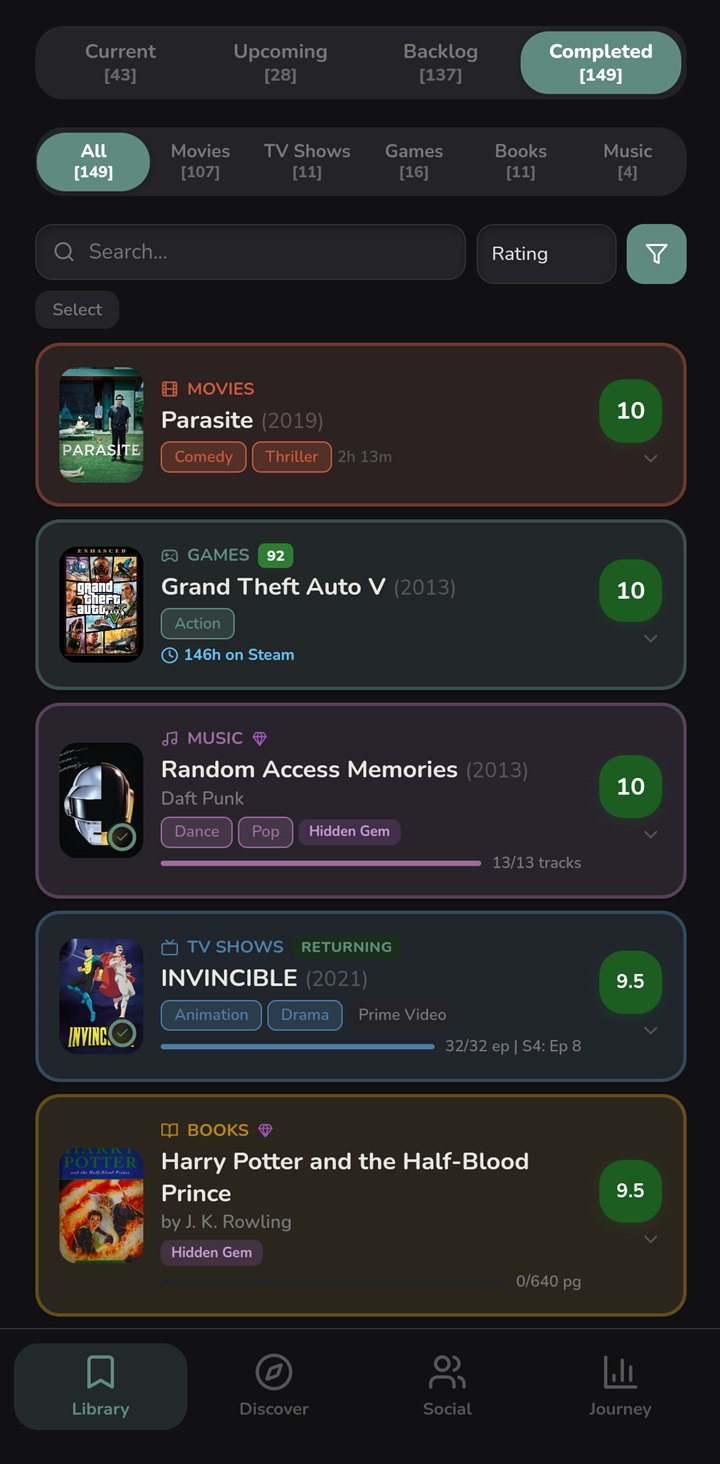
-
1
Five libraries, one shelfEvery format is a tab with its own count. Music is one of them, not a footnote.
-
2
One scale for everythingA film and an album are rated the same way, which is what lets one recommend the other.
-
3
Playtime imported, not typedConnect Steam and the playtime comes in with the game.
-
4
Tracked to the trackAn album to the track, a series to the episode.
Each format gets a screen of its own.
Most trackers do one of these properly and keep the other four as a list of titles. Here each one is built around what it measures: a critic row for a film, an episode grid for a show, store prices for a game, a shelf for a series of books, a track list for an album.
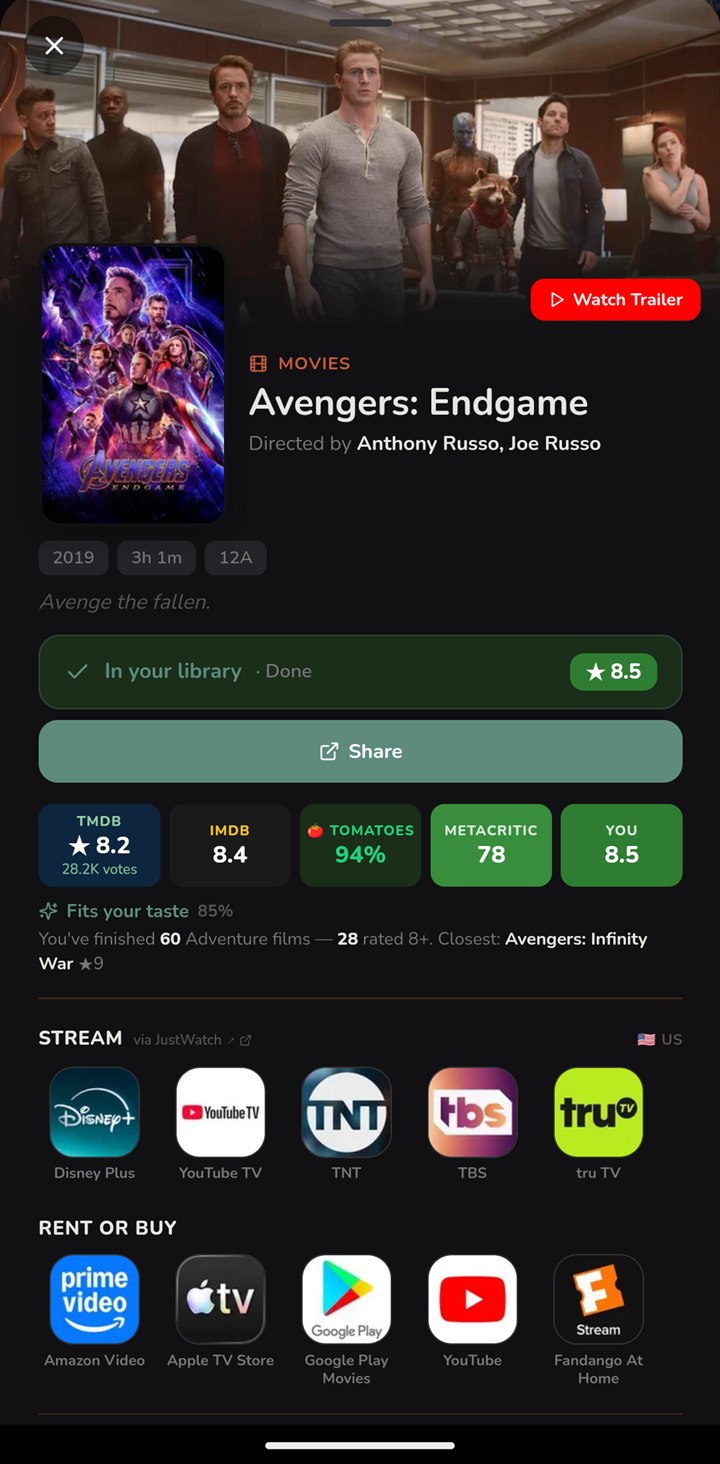
TMDB, IMDb, Rotten Tomatoes and Metacritic, then yours, in the same row at the same size.
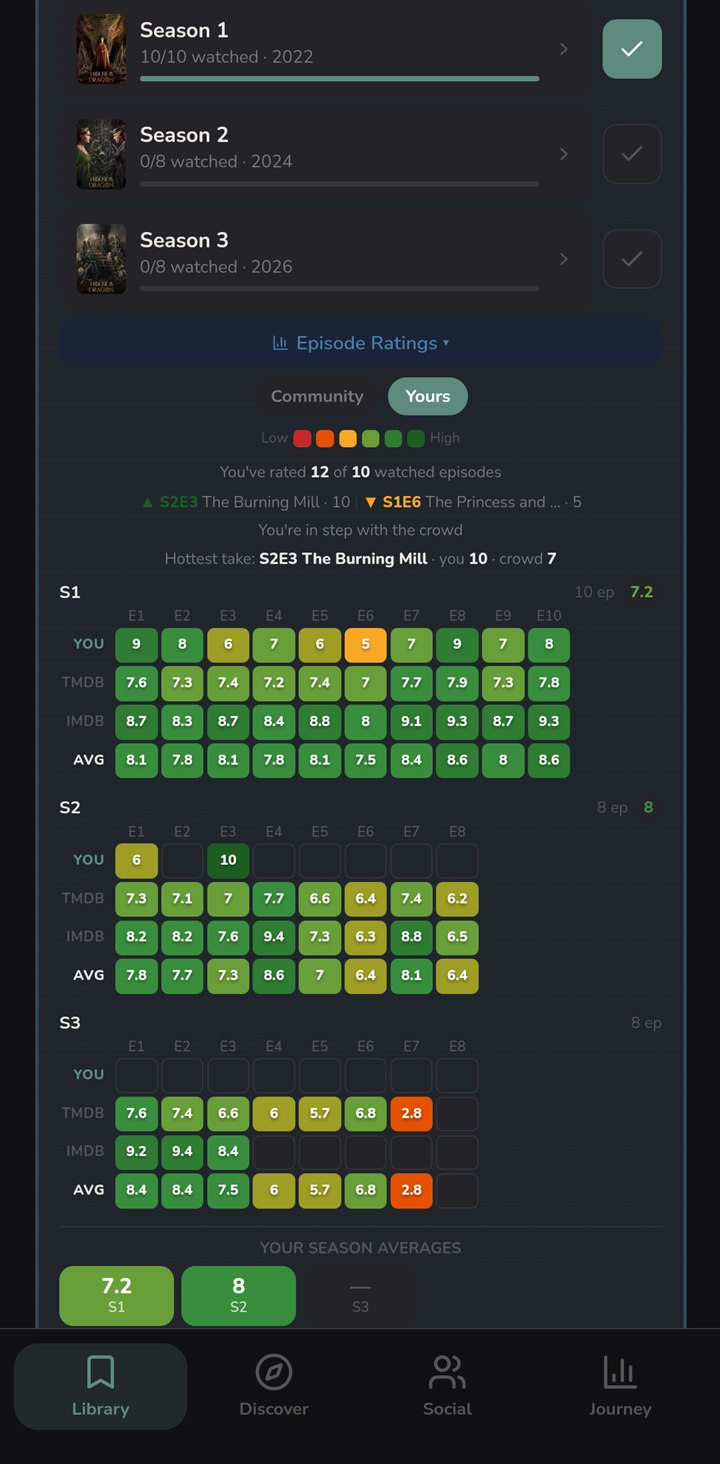
Rate them as you watch, season by season, and Consu points at the episode where you and everyone else disagreed most.
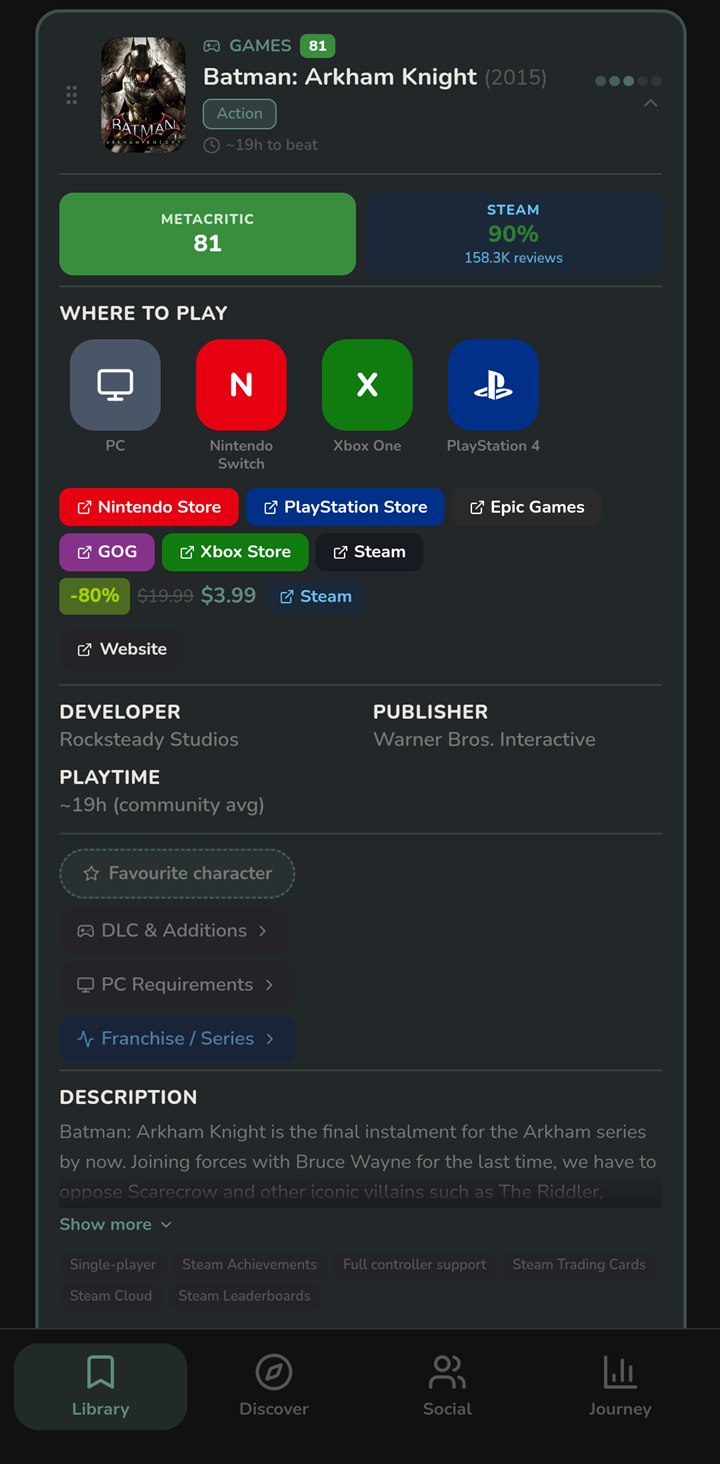
Every platform that runs it, and what it costs today on each store that sells it, sale prices included.
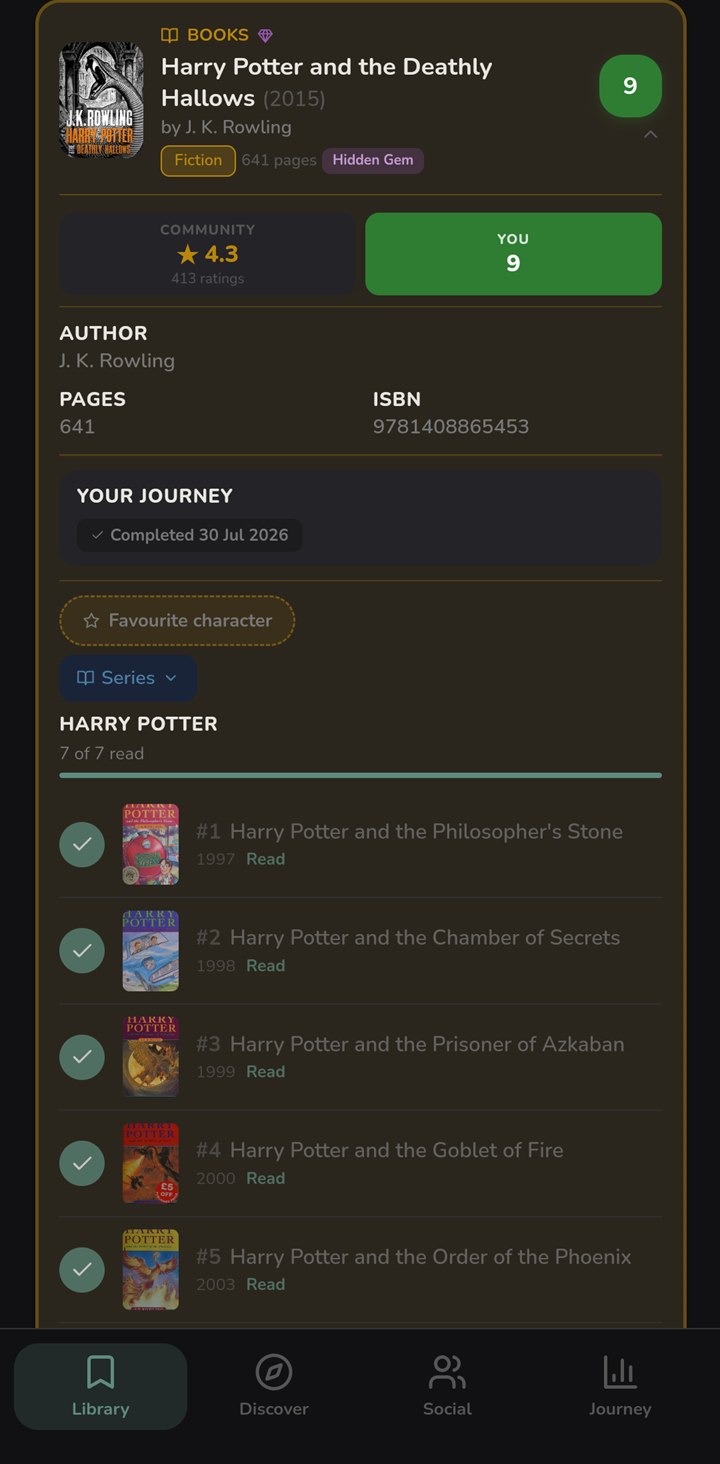
The whole series on one shelf with one bar across it, instead of a row per book with nothing joining them.
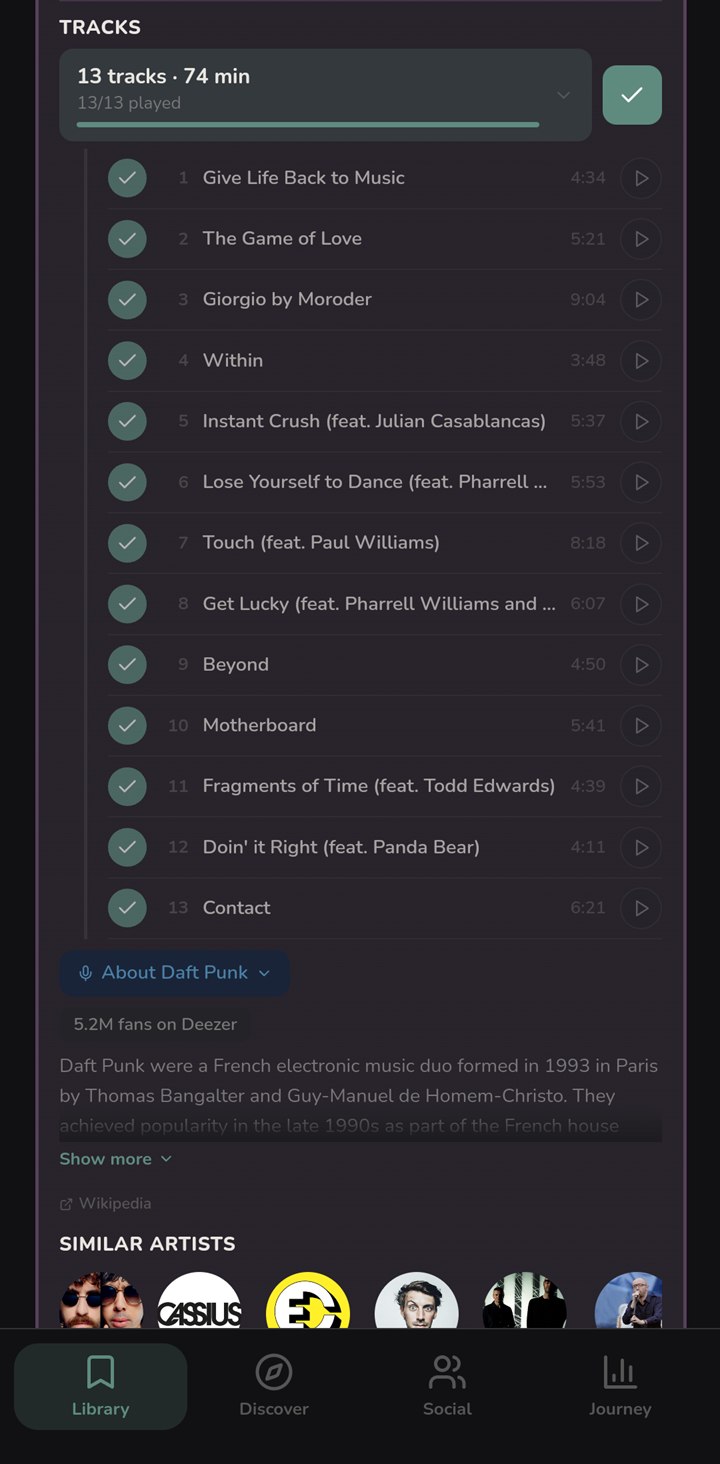
Every track with its length and a preview, and the artist behind them.
Plates 02–06 · One detail screen per format, printed at the same size.
Now make one yourself.
Tap two or three things you have loved. What comes back is worked out from the genres they share, weighted so an unusual one counts for more than a common one, and every result names the pick it came from. Same arithmetic the app runs over a whole library, on twenty titles instead of yours.
It counts what it can, and says what it can’t.
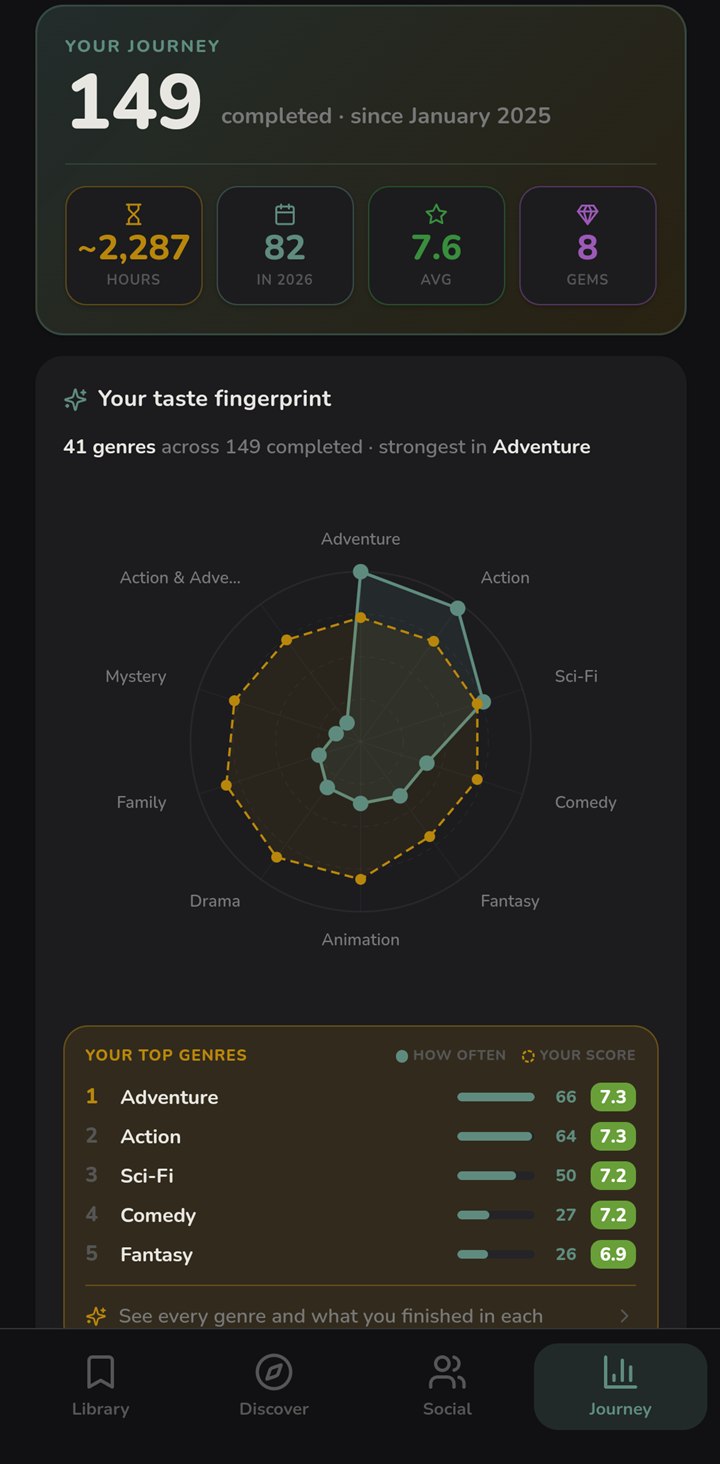
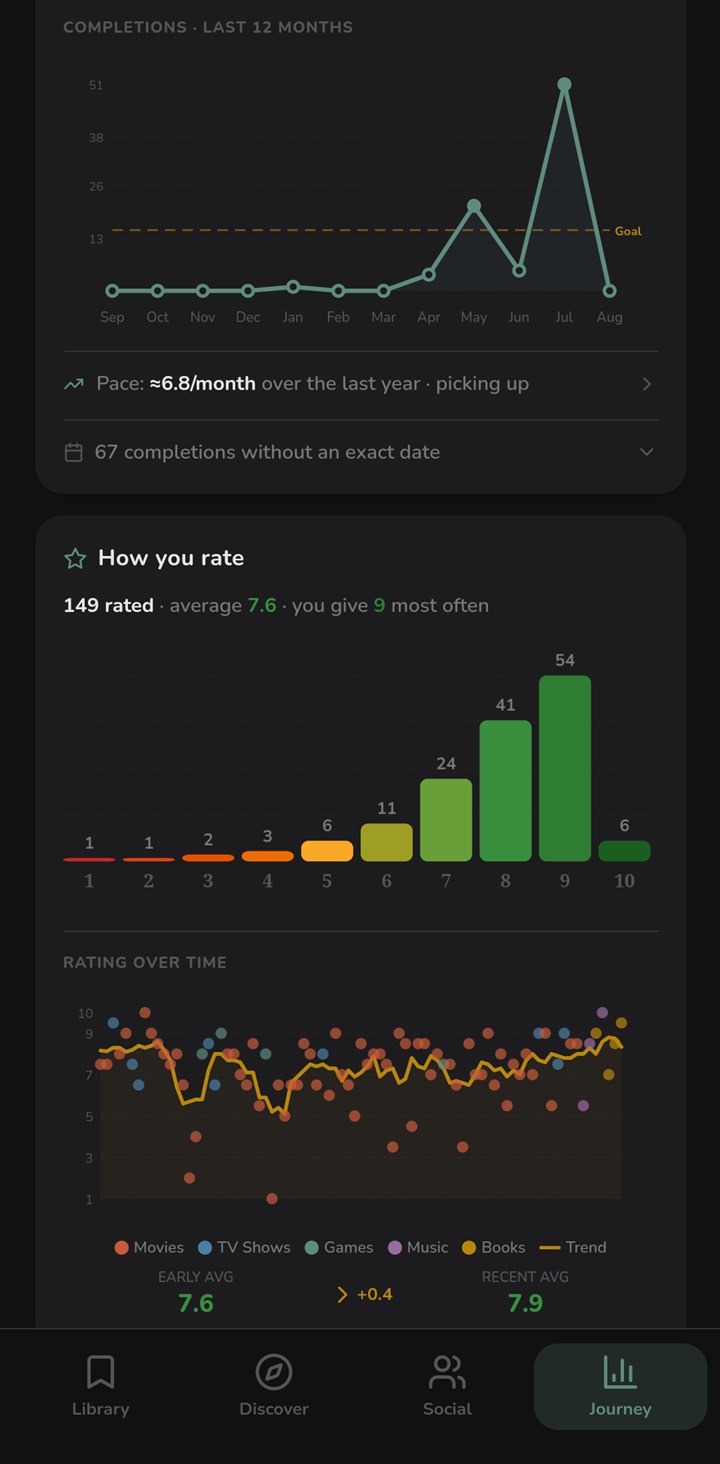
Everything you have logged rolls up into one page: hours, genres, the months you finished things, the shape of your scores. It is arithmetic over your own list and nothing else, so every figure points back at something you entered.
-
Hours it can prove, and no moreSteam playtime and ticked tracks are measured. Runtimes and page counts are worked out, and carry a tilde to say so. Anything it cannot establish counts as zero, never as a guess.
-
Genres ranked two ways at onceHow often you finish a genre, set against what you give it. A genre you get through constantly and rate badly looks nothing like one you love, so the table prints both columns instead of picking one.
-
A year of finishing, against a line you setAnything undated is counted and said out loud, not spread across months the app cannot prove.
-
Every score you have given, on one axisThe shape of your scores, then the whole history in order, with all five formats on one chart because they share the same ten. An early average against a recent one, so you can see whether your standards moved.
Plates 07 and 08 · One page of the app, scrolled.
You have already logged all this somewhere.
A film diary in one app, a shelf in another, a game library on a platform, a listening history behind a login. Six services come straight across, and there are two more ways in for whatever is left.
-
TV Timeclosed 15 July 2026
Shows, every episode you marked watched, your watchlist and your favourites.
The export you saved before it closed.
-
Steam
Your library and wishlist, with the hours already on the clock against each game.
Paste your profile URL.
-
Letterboxd
Films, your ratings, and the dates you watched them.
The CSV from your data settings.
-
Goodreads
Shelves, ratings and read dates.
The CSV from the import page.
-
Spotify
Albums you actually listened to, with the minutes and the track count behind each one.
The extended streaming history from your privacy download.
-
ListenBrainz
The same, pulled from your account. Last.fm scrobbles come across with it.
Your username.
-
GOG, Epic, consoles
The platforms that give you no export. Titles go in and Consu looks them up.
Paste a list, one per line.
-
A Consu backup
Everything, exactly as it was: ratings, dates, episode ticks, the lot.
The JSON file Consu wrote for you.
TV Time closed and deleted what it held. Everyone who had saved an export still has their years of watching. Consu writes one JSON file with all of it inside and reads that file straight back, so the way out exists before you need it.
You pay once because nothing here is running a meter.
Every pick this app makes is arithmetic over ratings you typed, worked out on your own phone. Nothing is sent away to be thought about, so nobody sends me a bill for it.
Once. It shifts a little by region, and it covers every Pro feature added after the day you buy it. No monthly tier underneath it, nothing else to buy.
Seven days free before that, if you want them. No card, no charge, nothing to cancel.
-
Up Next and Fits tonight
Ranks your backlog, then narrows it to what actually fits the evening in front of you.
-
For You
Discover picks worked out from your own ratings, in all five formats, each naming the title it came from.
-
The Time Ledger
Your hours across all five: measured where it can, marked with a tilde where it had to work them out, zero where it cannot tell.
- Only-my-services filters
- Streaming arrival alerts
- Premium themes and fonts
- Stats insights and recap
- Unlimited pins
- CSV export
- Custom profile photo
- Profile colour and frames
The library itself is not the product. Tracking is free in all five formats, with no cap on how much goes into it, no ads, and no account unless you want your things on a second device. Pro is the layer that reads what you tracked.
Questions.
-
Do you need an account?
No. Consu works anonymously. Sign in with Google or Apple only if you want a cloud backup, the same library on a second device, or the social half of it.
-
What gets collected?
No ads, no advertising identifier, nothing sold to anyone. Crash reports and a small analytics funnel are the whole of it, and both switch off in Settings.
-
Can you take it all out again?
Any time. Settings writes your whole library to one JSON file for free, or to a spreadsheet CSV with Pro, and the same screen deletes the account outright.
-
Where do the recommendations come from?
Your ratings, and the genres you actually finish rather than the ones you only added. Every pick names the title it was built from, so a bad one tells you exactly why it was bad.
-
Is anything capped on the free side?
Not the library. There is no item limit in any format, paid or not.
-
Does it run on a tablet?
On iPad, in iPhone-compatibility mode. It is built phone-first, and a real tablet layout is on the list, not built yet.
-
What is the social side?
Explore ranks people by taste match, scored on what you have both finished. Open a profile for their library, their ratings and how your taste compares. The feed carries verdicts, not activity: what somebody finished and what they made of it.
-
Do your friends need it too?
For the social half, yes. Following, taste match and the feed all run between Consu profiles, and it is free for them as well. Everything else works alone.
-
Who can see your library?
Your profile is Public, Mutuals or Private, and it starts on Mutuals. Public can hide sections one at a time: what you have finished, your top rated, what you are on now, your backlog, your taste profile. Mutuals means the people you follow who follow you back, and they see the library in full.
-
Can two people share a list?
Yes. A shared list opens to all your mutuals and any member can add to it. A Together queue is the two-person version of the same thing, and it tells you when you and the other person have both added the same title.
-
Who makes it?
One person, in Ireland. Support mail comes to me.
Start with the last thing you finished.
One title, rated. That is enough for the first recommendation to have something to point at.
Free on both. No account needed to start.